How to Make Café-Quality Coffee at Home: A Beginner's Guide for Tea Room Fans
There is a particular pleasure in a tea room cup of coffee: the thick white cup, the saucer, the small jug of milk, and coffee that tastes rounded rather than sharp. The good news is that most of what makes that cup good has nothing to do with the chrome machine behind the counter. It comes down to fresh beans, a sensible grind, a ratio you can repeat, and water that isn't boiling. Get those four things roughly right and a French press on your kitchen counter will beat a tired cup from a high-street chain.
Start With the Beans, Not the Gadget
Most disappointing home coffee is simply old coffee. Buy whole beans with a roast date printed on the bag and aim to finish them within three or four weeks of that date. A supermarket bag stamped with a best-before date a year away tells you nothing useful about freshness.
Store beans in an airtight jar in a cool, dark cupboard rather than the fridge door, where temperature swings and smells get in. If you buy in bulk, the freezer is fine, provided the bag is well sealed and you take out what you need rather than thawing and refreezing the same beans.
For beginners, a medium roast is the safest choice. It has enough character to taste of something, but it is harder to make harsh than a very dark roast, which tends to taste mostly of the roast itself. Lighter, fruitier roasts can be lovely, but they usually want a finer grind and hotter water to show their best.
Grind Size Makes More Difference Than the Machine
Pre-ground coffee is not a crime, but it starts losing aroma within days, so buy it in small amounts and ask the shop to grind it for the method you actually use. If you grind at home, a hand burr grinder will serve you better than a cheap blade grinder, which chops beans into an uneven mix of dust and boulders. Those boulders under-extract while the dust over-extracts, and the result tastes both sour and bitter at once.
Here is the rough guide worth learning by feel:
- Coarse — French press. Think sea salt or raw sugar.
- Medium — filter machines, pour-over, Chemex. Think table salt or builder's sand.
- Medium-fine — AeroPress. Slightly softer than table salt.
- Fine — moka pot and espresso-style brewing. Fine sand that just holds together when rubbed between your fingers.
One rule covers most situations: if the cup tastes sour and thin, grind finer. If it tastes harsh and drying, grind coarser. Change only one thing at a time, or you will never know what worked.
Ratios, Water and Time
The basic ratio
Start at roughly one part coffee to sixteen parts water by weight. In practice, that is about 18g of coffee — two heaped tablespoons of whole beans, ground — to 300ml of water, which fills a decent mug with a little to spare. For a French press serving two, use 30g to 500ml.
A cheap digital kitchen scale is the most useful coffee purchase you can make. Scoops vary wildly depending on how the grounds settle, so two people using "two tablespoons" can end up with very different cups. If you have no scale, at least keep your scoop and your mug the same every day so you can adjust with some logic.
Water and temperature
Coffee is almost entirely water, so if your tap water tastes strongly of chlorine, so will your coffee. Filtered or bottled water makes a noticeable difference. For temperature, aim for just off the boil: boil the kettle, then wait 30 to 45 seconds before pouring. Boiling water straight onto grounds scorches them and brings out bitterness you cannot fix afterwards.
Four Methods Worth Learning
French press
Coarse grind, 30g to 500ml, water just off the boil. Pour, stir once, put the lid on and wait four minutes. Press the plunger down slowly, then pour straight away — coffee left sitting on the grounds keeps extracting and turns muddy. This gives a rich, slightly heavier cup.
Pour-over
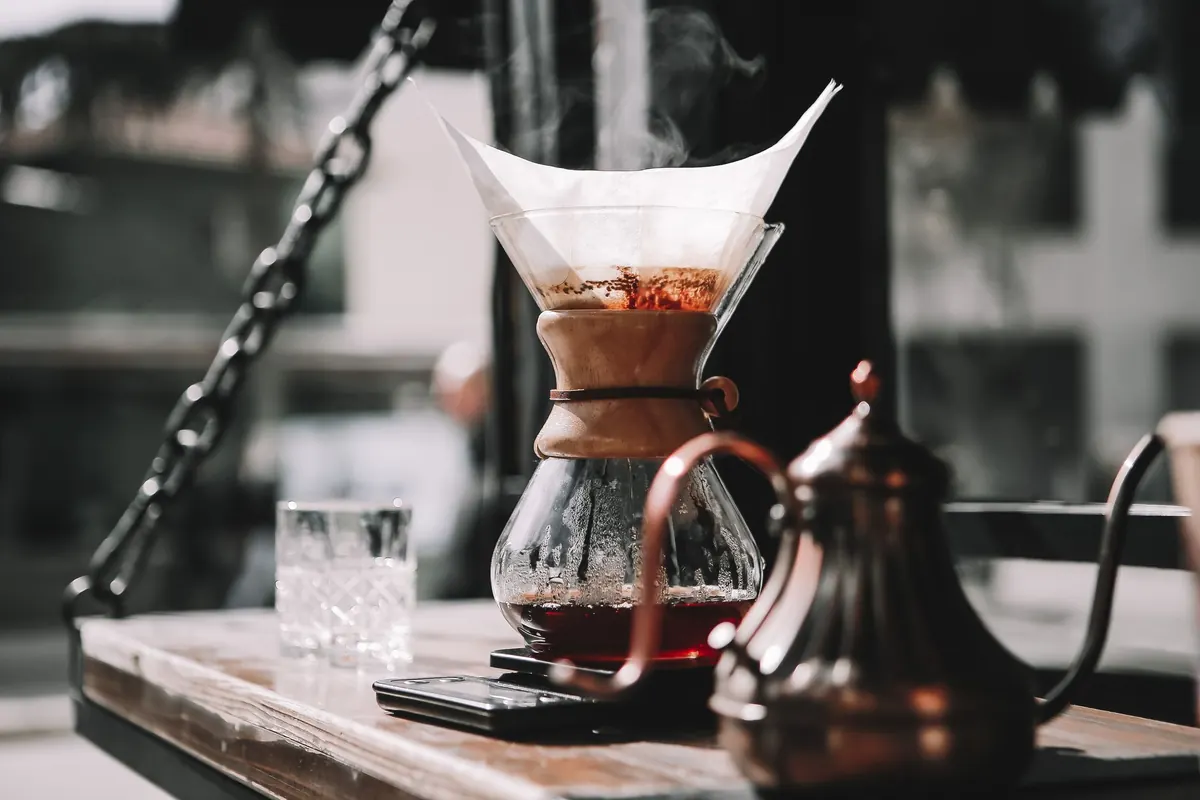
Medium grind. Rinse the paper filter with hot water first, which removes a papery taste and warms the jug. Add the coffee, pour a small amount of water to wet the grounds, wait 30 seconds, then pour in slow circles, keeping the bed of coffee level. The whole brew should take about two and a half to three minutes. This method gives the cleanest, brightest cup.
AeroPress
Medium-fine grind, 15g to 18g, 200ml of water off the boil. Stir, leave for a minute, then press gently over 20 to 30 seconds. It is quick, forgiving and easy to rinse clean, which makes it a good choice on a work morning.
Moka pot
Fine grind, filled level in the basket without pressing it down. Water goes in the base, below the valve. Use a medium flame and leave the lid open so you can watch. Take it off the heat as soon as it starts to gurgle and spit. The result is strong and syrupy, the closest you will get to espresso without an espresso machine.
Milk and the Café Finish
Whole milk froths best; barista-style oat milk is a reasonable alternative. Heat it gently to around 60 to 65°C — warm enough to be soothing, never boiling, because scalded milk turns sweet and slightly sour. A thermometer is helpful but not essential; if you can hold the jug comfortably against your palm, it is roughly right.
Without a steam wand, you can still get texture. Warm the milk in a pan or the microwave, then either shake it hard in a lidded jar for 20 seconds or use a French press: pour the milk in, pump the plunger up and down for half a minute with the milk sitting in the bottom third of the jug, then tap the jug on the counter and swirl before pouring. Warm your cup too. A cold cup pulls the heat out of a small coffee in seconds.
When It Tastes Wrong
- Sour, sharp and thin — under-extracted. Grind finer, brew a little longer, or use water slightly hotter.
- Bitter, drying and harsh — over-extracted. Grind coarser, shorten the brew, or let the water cool for longer.
- Weak and watery — not enough coffee. Add more grounds rather than steeping for longer, which only adds bitterness.
- Gritty or sludgy — grind too fine for the method, or you pressed the plunger too quickly.
- Inconsistent from day to day — weigh your coffee and water, and stop changing two things at once.
A Small Routine Worth Keeping
Pick one method and make it the same way for a week before you start adjusting. Write your ratio on a scrap of paper and stick it inside a cupboard door. The tea room feeling is not only about the drink: it is the warm cup, the saucer, the two quiet minutes where you are not doing anything else. That part you can absolutely recreate at home.
Photo: Taha Samet Arslan / Pexels