Loose Leaf vs Tea Bags: A Beginner's Guide for Tea Room Drinkers
Tea is two ingredients: leaves and hot water. That simplicity is why the gap between a supermarket tea bag and a spoonful of loose leaf can feel so wide in the cup. If you have only ever brewed bags at home, a tea room menu can read like an exam you did not revise for — first flush, silver tips, broken orange pekoe. None of that vocabulary is required to enjoy a better cup. What matters is knowing what each type actually is, how it behaves, and what you trade away when you choose one over the other.
What is actually in a tea bag
Most everyday bags hold fannings or dust: the small pieces of leaf left behind after the larger grades are sorted for sale. Small pieces have more surface area, so they release colour and tannin quickly. That is the design brief. A bag should give you a dark, brisk cup in two or three minutes with no equipment and no decisions.
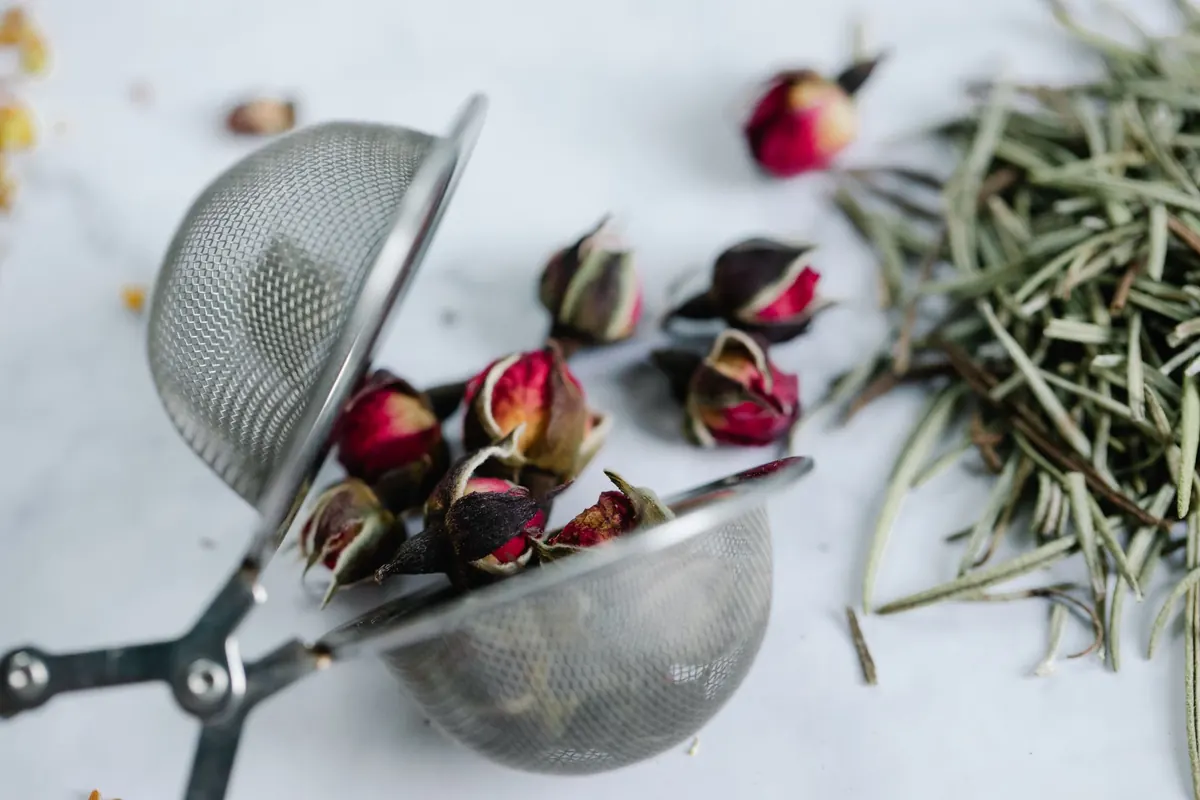
Loose leaf is tea that has not been cut that small. Whole leaves, or leaves broken into a few large pieces, are sold by weight. They take longer to give up their flavour, and they keep giving it for several infusions. Put plainly: a bag is a portioned product; loose leaf is an ingredient.
Flavour: where the difference comes from
Cramped inside a paper pouch, a leaf has little room to move. Hot water struggles to circulate, so you pull out the bright, quick notes and some of the harsher ones, and often miss the sweetness and aroma sitting deeper in the leaf. Loose leaf, given space in a pot, unfurls, and the flavour arrives in layers rather than all at once.
The second difference is consistency. Big blended brands aim for the same taste in every box, year after year — a genuine achievement, and very comforting at seven in the morning. Loose leaf varies. A Darjeeling from one garden in one season will not taste like the same tea from the next hill, or the same garden a year later. Some drinkers find that maddening. Others find it is the whole point.
The line is not absolute, either. Plenty of companies sell whole leaf in large pyramid bags or sachets, and these sit comfortably in the middle: real leaf, real flavour, still tidy.
Brewing: what changes in practice
With a bag, the method is on the box: one bag, boiling water, three minutes, out. With loose leaf you control four things — quantity, water temperature, time, and space. Changing any of them changes the cup, which is either the pleasure or the burden of it.
A routine that works for most black teas:
- Warm the pot. Swill a little hot water round it, tip it out, then add the leaf. Small thing, noticeable result.
- Measure roughly a heaped teaspoon per cup, plus one for the pot. Bulky leaves such as white tea or big oolongs need more by volume — fill the infuser about a third full.
- Let the kettle settle. Black tea, pu-erh and most herbals take water close to boiling. Green, white and lighter oolongs prefer it cooler, so leave the kettle a couple of minutes.
- Watch the clock, then taste. Green teas are often ready in one to two minutes, black teas in three to four. Start at the short end and add time if it tastes thin.
- Take the leaf out, or pour the whole pot through a strainer. Whole leaves usually brew a second and third time, and the second is often the best.
Bags are more forgiving of inattention, though not infinitely so. Squeezing a wet bag against the side of the mug releases extra tannin and turns the tea bitter, so if you dislike a harsh finish, leave the bag alone and just lift it out.
Cost per cup
Loose leaf usually looks more expensive on the shelf, because you are buying weight rather than a fixed number of portions. The sums change once you brew. You tend to use less leaf per cup than you expect, and a whole-leaf tea can give two or three infusions from the same spoonful. Buy small amounts first, from a shop that will sell you fifty grams or brew you a cup, rather than committing to a large tin of something you may not like.
Bags remain the cheapest way to put a hot drink in front of a lot of people quickly. If your tea is mainly a vehicle for milk and a biscuit, that is a perfectly reasonable choice.
Convenience, honestly
Bags win this one and it is not close. No kit, no mess, no judgement, portion control built in, and the same result whether you are half asleep or halfway through a conversation. Loose leaf asks for an infuser, a pot, a strainer and somewhere to tip the spent leaves. It also asks you to pay attention, at least for the first few weeks while you work out how you like it.
In a tea room the trade is deliberate. Ordering loose leaf is ordering a slower drink: a pot on the table, a strainer, perhaps a second cup from the same leaf. If you have twenty minutes and want to sit, that is a good use of them. If you are dashing for a train, ask for a bag.
What to look for on a tea room menu
- Names of gardens, estates, regions or harvests — a first flush, a single estate Assam — usually mean loose leaf.
- Vague names such as "breakfast" or "afternoon" tell you nothing. Ask.
- Ask whether the pot comes with a strainer, and whether hot water refills are included.
- If green or white tea is listed, ask them not to use fully boiling water if they can help it.
- If it is your first visit, say so and ask what the staff drink. Most tea rooms are pleased to be asked.
If you are used to bags, start with something familiar in loose form: an English breakfast blend, an Assam, a Ceylon. The flavours will be recognisable and the improvement obvious.
A practical place to start
Keep both. Use bags for rushed mornings and the office drawer, and keep one loose leaf you genuinely like for the times when you can sit down. Buy a simple infuser or a small pot, brew one tea at a time, and note what you did on the occasions it tasted good. Within a fortnight you will know your own preference for quantity and timing better than any instruction on a packet.
One note on caffeine: how much ends up in your cup depends on the leaf, the quantity and how long you steep it, and "herbal" covers a wide range of plants. If you are pregnant, taking medication, or watching caffeine for a medical reason, ask a pharmacist or doctor rather than guessing.
Photo: Anna Pou / Pexels